A First Visit to a Football Ground, Planned Around the Spaces
Plan a first visit to a football ground by understanding the route from arrival to seat, the concourse and the quieter moments around play.
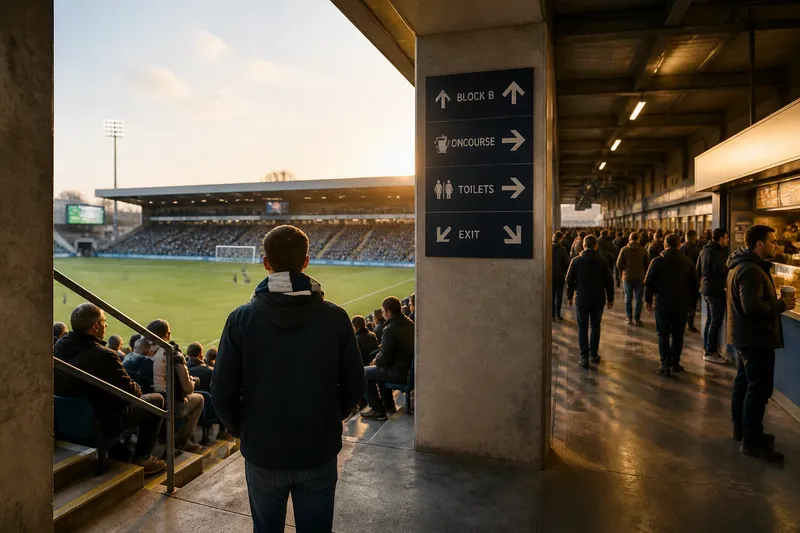
A first visit to a football ground feels easier when you treat the place as a sequence of spaces, not a single destination. The route from the surrounding streets to your seat, then to the concourse and back again, gives you a simple map for the day before the match itself starts.
That approach leaves room to notice what makes a ground distinctive: the change in sound as you pass inside, the view opening between rows, and the small pauses when play stops. You do not need to know every chant or custom to feel part of the occasion. Start by learning how the spaces connect.
What should I know before arriving?
Before setting off, find your entrance, section and seat on the ticket or club information you have received. A ground may have several stands with similar-looking approaches, so knowing the name or letter of yours is more useful than simply aiming for the most obvious gate.
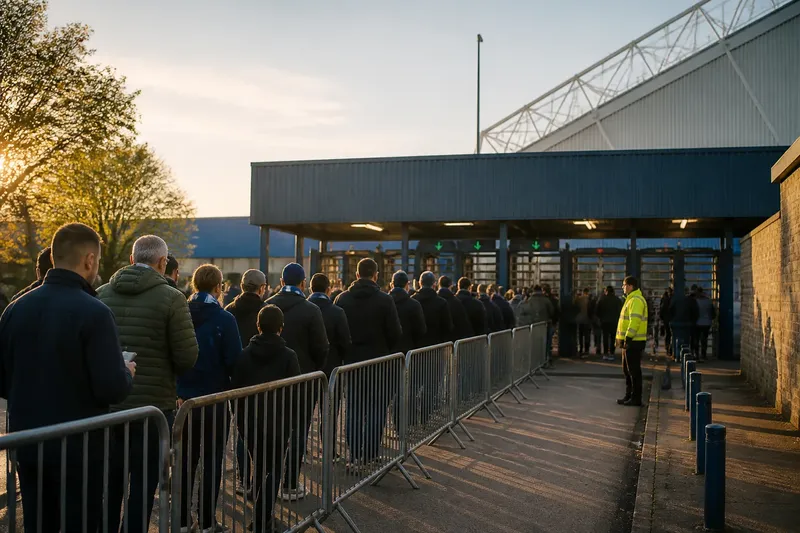
Look at a map of the surrounding area and choose a clear meeting point for anyone coming with you. A station exit, a recognisable corner or a particular landmark is easier to describe than “outside the ground”, where crowds can spread along several streets. Keep your ticket accessible, and check how you will travel back while your phone still has a signal and battery.
Think about the time between arriving and taking your seat. If you want to look around, allow space for that rather than arriving at the last possible moment. If you prefer a quieter approach, plan to go directly to your block and settle in. Neither choice is more authentic; the useful plan is the one that suits you.
Wear comfortable shoes and clothing suited to the weather, especially if part of your route involves standing outside. A small bag is easier to carry through busy passages than one that needs constant adjustment. Any restrictions on entry or facilities depend on the venue’s current information, so use the details provided for your visit rather than guessing.
How do I find my way inside?
Once you are through the entrance, use the signs for your stand, block or section. These labels often appear at several points, so check them as you move rather than assuming the first sign has taken you all the way to your seat. If the layout is confusing, ask a steward a concise question such as, “Which way is block B?”
It helps to separate the journey into three landmarks: the stand entrance, the block entrance and the row. The stand entrance gets you into the right broad area; the block entrance narrows the search; the row and seat number finish it. This is like following the labels on drawers rather than searching an entire room at once.
Take a moment to read the row markers before stepping along a line of seats. Depending on the layout, rows may run in different directions or have gaps at intervals. If you have to pass other spectators, a quiet “excuse me” and a brief pause are usually enough. Keep your ticket details handy until you are settled, then put them somewhere secure.
For a first visit, the best route is not necessarily the shortest route. A visible, well-signed passage can be easier to follow than a shortcut through a busy junction. Notice one or two landmarks on the way in—perhaps a distinctive sign, a staircase or a particular concourse opening—so you have reference points when you leave your seat.
Where should I go before kick-off?
Go to your seat first if you want to check the view and understand where you are in the stand. You can then decide whether to visit the concourse, look for food or drink, or simply stay put. This gives you a reliable home point inside a large, unfamiliar building.
The concourse is more than a corridor. It is a shared space where people collect, talk, buy refreshments and keep an eye on the match if a screen is visible. Its busiest areas may be close to service points or entrances, while less congested spots can be further along. If a queue is forming, check whether it blocks the route through before joining it.
If you want a snack or drink, consider how you will carry it back and whether you would rather have it before play begins or during a pause. The right choice depends on the person beside you as well: passing through a tight row with several items can be awkward. Keep the movement of other spectators in mind, and leave clear space where people need to get past.
Say you arrive with a friend and discover that your block is at the far end of the stand. You could first locate your seats, agree that the nearest concourse sign is your reference point, and then take turns going for refreshments; the expected result is a less hurried return and a clearer meeting place if you become separated.
How should I choose my seat?
Your allocated seat is the starting point; the view and surroundings are what you can assess once you reach it. Notice whether the pitch is easy to see from your position, whether a barrier or nearby structure affects part of the view, and how close the aisle is. These observations help you settle without making assumptions based on a seating map alone.
If you are visiting with someone, check that you have the seats you expected before moving along the row. An aisle seat may make arriving and leaving simpler, while a seat further in can mean fewer interruptions from people passing. The trade-off is personal: think about how often you expect to move and whether you value an unobstructed view of the pitch or easy access to the aisle.
Once seated, take in the stand rather than only looking at the field. Notice how the roof changes the sound, where the entrances sit and how the sections relate to one another. The crowd’s attention shifts as a match develops, and seeing the surrounding stands can make that collective movement part of the experience.
Keep your feet and belongings within your own space as far as possible, and be considerate when people need to pass. If someone is already in a seat you believe is yours, check the row and seat details calmly before assuming a mistake. A steward can help resolve confusion without turning it into an argument.
What happens between moments of play?
Matchday is not continuous action. The ball may go out, play may pause, or the teams may leave the pitch at half-time. These intervals are useful chances to decide whether to stay in your seat, stretch, visit the concourse or simply watch the ground around you.
Look for the natural flow of people before leaving your row. If several neighbours are standing to move at once, waiting for the passage to clear can be easier than squeezing through. When returning, use the landmarks you noticed on the way out and check the block and row signs again if needed.
Some spectators sing, clap or respond to events around them; others watch quietly. You can join in if it feels natural, or simply follow the match. There is no need to copy a gesture you do not understand. Listening first lets you pick up the mood and decide how you want to take part.
At half-time, a concourse may become more crowded than it was before kick-off. If you want to leave your seat, choose what matters most—refreshment, a short walk or a visit to the facilities—and avoid trying to do everything in a rush. If you would rather remain in place, that is a perfectly good way to experience the interval too.
What should I do when the match ends?
Let the final whistle mark the start of your exit rather than a signal to sprint. People leave at different speeds, and a short pause can make it easier to gather your things, check that everyone is together and remember the route back to the stand entrance.
Follow the signs and the movement of the crowd, but do not assume that the way out is identical to the way in. Some venues direct visitors through particular passages or exits. If you are unsure, ask a steward where your planned route begins. Keep your meeting point clear and specific in case your group becomes separated.
Outside, step away from the main flow before stopping to check directions or send a message. It gives others room to pass and makes it easier to decide whether to head for transport, wait for a friend or take a quieter route. The ground may feel different after the crowd disperses: the same approach that was full of conversation on arrival can become a set of ordinary streets again.
Which questions matter most?
How early should I arrive at a football ground?
Arrive with enough time to locate your entrance, find your block and settle without rushing. Build in extra room if you want to explore the concourse or are unfamiliar with the journey, and use the arrival guidance supplied for the match.
What should I do if I cannot find my seat?
Check the stand, block, row and seat details on your ticket, then compare them with the nearest signs. If the labels still do not make sense, ask a steward rather than wandering through another section.
Can I leave my seat during the match?
You can usually move during a pause, but the most considerate moment depends on the match and the movement around your row. Wait for a natural break where possible, and let people know briefly as you pass.
Do I need to know the chants?
No. You can listen, join in when a response feels clear, or enjoy the match quietly. Watching how the crowd reacts is a good way to understand the atmosphere without feeling obliged to perform it.
How can I make the visit feel manageable?
Choose a few reference points rather than trying to memorise the whole ground: your entrance, the block sign and one recognisable place on the concourse. Keep your ticket accessible, agree on a meeting point with your companions and give yourself permission to pause when a passage feels crowded.
A first visit to a football ground is easier when you treat each space as a small decision: where to enter, where to sit, when to move and when to stay. Once those choices feel familiar, your attention can shift from finding the way to noticing the voices, colours and shared pauses that give the ground its character.