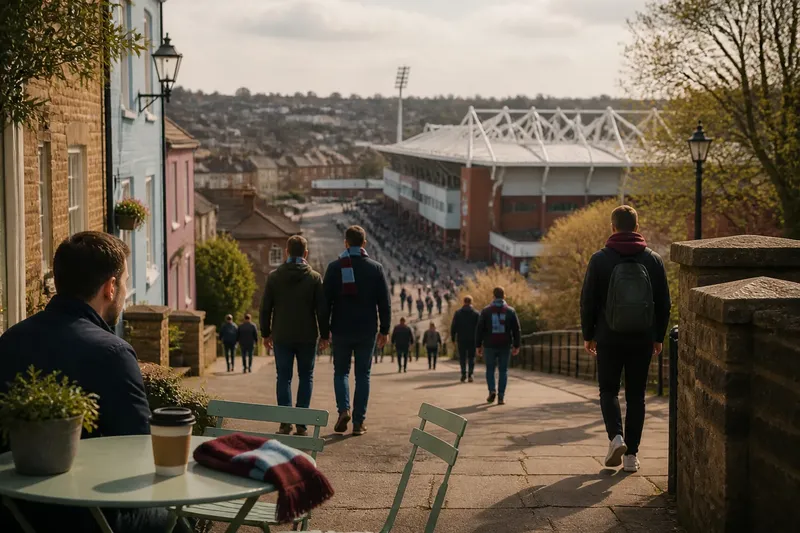
Why the Turnstile Shapes the Matchday Arrival
Turnstile matchday arrival feels like a shift from street to ground; learn how the queue, ticket check and threshold shape that change.
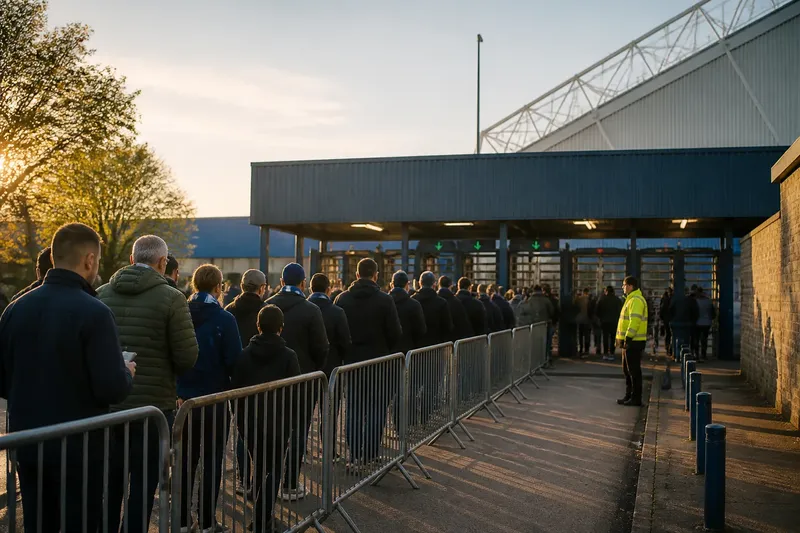
A turnstile matchday arrival begins before the ticket meets the scanner: the queue slows your walk, narrows your attention and points you towards the ground. Treat that entrance as a sequence rather than a single barrier, and the shift from pavement to matchday becomes easier to read.
Approach the entrance
Start by following the signs for your stand or entrance, rather than aiming for the most visible gate. A ground may have several turnstile blocks, each serving a different section. The right approach keeps you out of a queue that cannot admit you and leaves stewards free to direct people who need help.
As you get closer, notice how the street changes. The open pavement gives way to barriers, signs and people moving at a slower pace. Put away anything you do not need in your hand, and have your ticket accessible without holding it up from far back in the queue. This small adjustment makes the line feel less like a crowd to push through and more like a path with a clear next action.
Keep the people around you in view, especially if you are arriving with companions. Agree on a simple meeting point outside the entrance in case you are separated; the turnstile is a poor place to stop and search for someone. If a steward redirects the queue, follow that instruction rather than trying to preserve your place in a line that has changed shape.
Read the queue
A turnstile queue has its own rhythm. It compresses when the person ahead pauses, loosens as the next barrier opens, then gathers again. Move with that rhythm instead of stepping forward at every small gap. Like a one-way door in a busy shop, the turnstile makes each person’s passage brief but indivisible: the next person waits until the mechanism is ready.
Use the pause to prepare. Check that the ticket is the one for this entrance, and keep the screen bright enough to scan if you are using a phone. If you have a paper ticket, hold it where it is easy to reach. Avoid balancing a drink, bag and phone in the same hand at the point of entry; the queue is easier for everyone when each person can complete the check without fumbling.
Be attentive to those whose passage may take longer. A child may need an adult close by, and someone with a mobility requirement may be directed to an accessible entrance. Follow the steward’s guidance and leave space rather than assuming the queue must move at one pace. The practical aim is not to hurry the line; it is to let each person reach the barrier without being crowded.
Pass the ticket check
At the front, wait until the person ahead has cleared the turnstile and the attendant or scanner is ready. Present the ticket as directed. For a phone ticket, use the brightness setting and wallet or ticket app specified by the provider; for a printed ticket, keep the printed code flat enough to be read. If the scan does not work, step aside when asked so the queue can continue while the issue is checked.
Do not assume that a failed scan means the ticket is invalid. A dim screen, glare, a folded paper code or selecting the wrong ticket can all make the moment awkward. Stay calm, show the ticket to the attendant and follow their instructions. If you have several tickets on one device, make sure the attendant can see the correct one before trying again.
Say you arrive with a friend and your phone shows two tickets, but the first scan does not register because the screen is dim. You move to the side when the attendant indicates, raise the brightness and select the second ticket only when your friend is ready to enter. The observable result is a clearer check and less pressure on the people still waiting behind you.
Cross the threshold
Once the ticket is accepted, move through the turnstile in the direction shown and keep going until you are clear of the mechanism. Do not stop immediately on the other side to read a message or wait for your group. The entrance is still a moving channel, and someone behind you may already be stepping through.
That brief passage marks a change in attention. On the street, you may have been watching traffic, looking for friends or choosing a route. Inside, signs and stewards orient you towards a stand, concourse or stairway. Take a moment only after reaching a place where people can pause without blocking the flow. Then check the stand information and continue to the next sign.
The transition is physical as well as symbolic, but it need not be dramatic. A turnstile can feel routine to a regular supporter and unfamiliar to a visitor; either way, its small sequence gives the arrival a shape. The queue gathers the crowd, the scan confirms entry, and the revolving barrier carries each person across the boundary.
Where do I go next?
What should I do if my ticket will not scan?
Pause and follow the attendant’s direction, moving aside if asked. Check that you are presenting the ticket for the correct entrance and use the help point or staff member rather than repeatedly forcing the scan.
Should my group enter together?
Follow the instructions for the ticketing system and entrance, since some tickets are checked individually. If your group needs to regroup, choose a place away from the turnstiles and queue before entering.
What if I need an accessible entrance?
Ask a steward or use the accessibility information provided by the ground to find the appropriate route. Do not assume every turnstile offers the same access or that the nearest entrance is suitable.
When should I get my ticket ready?
Have it accessible as the queue approaches the front, not held out from the back of the line. That leaves you time to check the screen or paper without rushing the person ahead.
Carry the rhythm inside
After you clear the barrier, keep the same awareness of movement that helped in the queue. Follow the signed route to your section, let faster-moving people pass where the space allows, and avoid gathering at the top of stairs or in a narrow doorway. If you need to stop, move to a spot where others can pass safely.
Turnstile matchday arrival is shaped by these small decisions: choosing the correct entrance, preparing the ticket, respecting the queue and clearing the threshold before pausing. The turnstile does not create the whole atmosphere of a ground, but it gives arrival a distinct beat. Pay attention to that beat, and the move from street to stand feels less like a sudden change of scenery and more like entering the shared space of the match.
Where entry requirements or access arrangements depend on the ticket provider, ground instructions or local rules, follow those directions and ask staff if anything is unclear.